



Photo by Michael Fischer via Pexels
By Stephen Beech
People have been using cannabis to get “high” for at least 2,800 years, reveals new research.
Archaeologists found hundreds of cannabis seeds in an ancient Siberian tomb belonging to high-ranking members of a society in what is now Russia.
Analysis of human hair also found in the tomb indicated use of the drug as a narcotic, according to a study published in the journal Science.
Six of the seeds were radiocarbon dated and, together with other dating results, the findings indicated that they were placed in the grave in the early 8th century B.C.
Archaeologists say the findings at the site, where evidence of horse and possible human sacrifices have previously been uncovered, are the oldest directly dated archaeological evidence of the use of cannabis for its intoxicating properties.

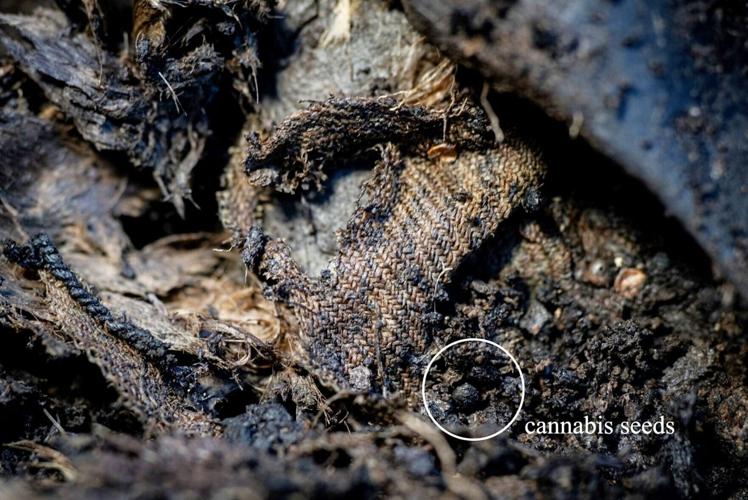
The cannabis seeds are not easy to spot in the excavation. (T. Wallace via SWNS)
Cannabis is one of the most commonly used psychoactive plants today, but scientists say it is difficult to determine archaeologically how it was used in prehistoric times.
Plant parts - such as flowers, leaves and resins - are perishable and therefore rarely survive.
Previous studies have shown that cannabis served several purposes - such as the production of oil or fiber - and was not used solely as a drug or medicine.
An international research team combined several analytical methods in its investigation of the “princely” tomb in the South Siberian Republic of Tyva.
They say the tomb belongs to high-ranking members of Scythian society, a horse-riding culture of the Eurasian steppe.
Study lead author Gino Caspari said: “The seeds show that cannabis played an important role in the rituals surrounding the burial.”
The research team also examined preserved human hair from the central burial chamber, with the analysis pointing to cannabis use.

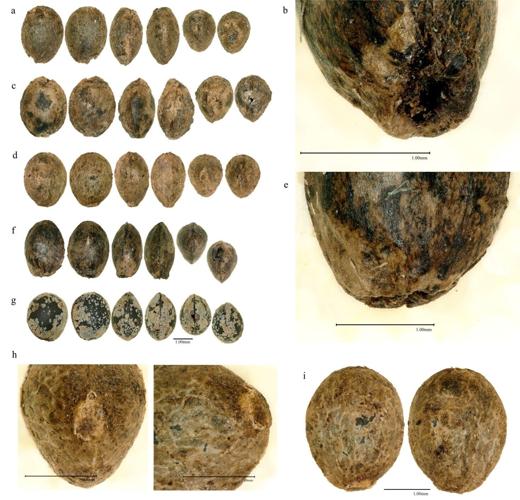
When photographed under good lighting, the seeds reveal a characteristic net-like pattern that allows for their identification as cannabis. (Caspari et al. via SWNS)
Caspari, from the University of Bern in Switzerland and the Max Planck Institute of Geoanthropology in Germany, said: “This study is particularly insightful because it combines the analysis of plant remains with molecular traces in the human body.”
He says the seeds recovered from the ancient grave likely stem from wild plants, but it wasn’t possible to determine from the analysis whether they were specifically cultivated for their psychoactive properties.
Caspari said the seeds’ presence in a grave doesn’t, in and of itself, prove the psychoactive use of cannabis.
He says that became apparent only through the analysis of the hair.
In several of the hair samples examined, the research team found “clear signals” consistent with cannabinol (CBN).


CBN is produced, among other things, by the oxidation of tetrahydrocannabinol (THC), the most important intoxicating compound in cannabis.
The research team also detected weak signals that, based on their mass, are consistent with THC.

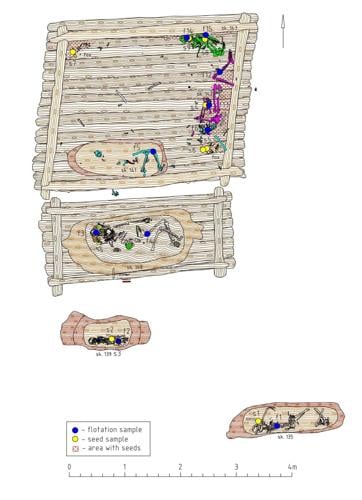
A site plan of the central burial area of the Tunnug 1 princely tomb. (Caspari et al. via SWNS)
High-resolution mass spectrometry was among the methods used to analyze the hair samples.
Caspari says analysis of the hair indicated cannabis use, but not the amount consumed.
He said it wasn’t possible to determine with certainty how the active compounds entered the body - for example, through inhalation or ingestion.
Later archaeological sites in Central Asia have previously revealed chemical residues of cannabinoids in vessels and on heated stones, clearly indicating inhalation.
Caspari said: “The molecular traces in the hair and the cannabis seeds come from the same grave and suggest that cannabis was used for its intoxicating properties.”
The research team believes the cannabis seeds were part of a ritual burial.
Caspari said: “In this princely tomb, the burials were accompanied by extensive horse sacrifices and, most likely, human sacrifices as well.”
The research team had previously discovered the remains of 18 horses that had once been arranged on the burial mound.

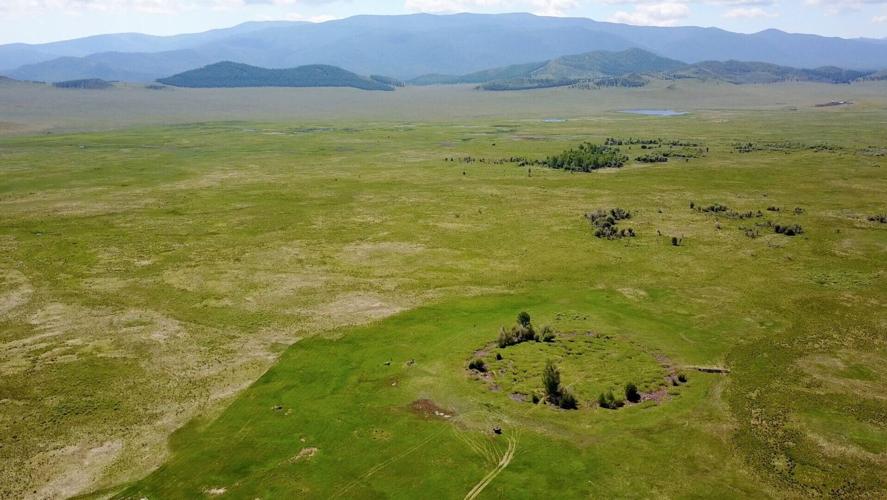
The Tunnug 1 archaeological excavation site in southern Siberia. (T. Wallace via SWNS)
Several dozen additional horse sacrifices and scattered human bones have subsequently been found there.
Caspari says the findings provide what is currently the oldest directly dated archaeological evidence of the use of cannabis for its intoxicating properties.
However, they do not allow any conclusions to be drawn about the THC content of the plants from that time.
Neither has it been possible so far to determine whether the plants were specifically selected or cultivated for higher levels of active compounds.
The research team is continuing its investigation.
Caspari added: “We have already begun sequencing some of the plant samples.
“DNA preservation is excellent in this case.
“This will help us learn more about the history of the domestication and spread of this crop soon.”


(0) comments
Welcome to the discussion.
Log In
Keep it Clean. Please avoid obscene, vulgar, lewd, racist or sexually-oriented language.
PLEASE TURN OFF YOUR CAPS LOCK.
Don't Threaten. Threats of harming another person will not be tolerated.
Be Truthful. Don't knowingly lie about anyone or anything.
Be Nice. No racism, sexism or any sort of -ism that is degrading to another person.
Be Proactive. Use the 'Report' link on each comment to let us know of abusive posts.
Share with Us. We'd love to hear eyewitness accounts, the history behind an article.